
What you need to know about choosing your niche, finding locations, planning your costs, setting up your systems and getting your first machine ready for business.
Thinking about starting a vending machine business? Vending can be an appealing business model because, once a machine is established in a suitable location, it can generate sales without requiring you to be there for every transaction.
But while vending can be relatively simple to operate, there is still plenty to organise behind the scenes. Choosing the right machine, finding suitable locations, working out your numbers, managing stock and keeping good records can make a big difference to how smoothly your business operates.
The good news is that you don’t necessarily need to start by purchasing a machine, filling a garage with inventory and hoping you’ll find somewhere to put it. A smarter approach is to build the foundations of your business first and secure a suitable location before committing to your first machine and stock.
Here’s a practical overview of the things to consider when getting started.
1. Decide What Type of Vending Business You Want to Run
Before buying anything, think about what you actually want your vending business to look like.
There are many types of vending machines and products, including snacks and drinks, healthy food, specialised products and machines designed for particular environments. Your choice may depend on the type of locations you want to target, the amount you can invest and how much time you want to spend managing the business.
You don’t necessarily need to choose one type forever. Starting with a particular niche or machine type can simply make it easier to learn the business and establish your systems before expanding.
Consider:
- What products you want to sell
- Who your ideal customers are
- Where those customers are likely to be
- The type of machine required
- Product shelf life and potential wastage
- How frequently the machine will need restocking
- How easy the products are to source
- Whether the location suits the products you’re considering

Tip: Think about the location first and the machine second. A machine that performs exceptionally well in one environment may perform poorly in another. Your customers and location should help determine what you stock and what type of machine you need.
2. Find a Location Before Buying Your Machine
One of the biggest mistakes a new vending operator can make is buying a machine before knowing where it is going to go.
A machine sitting in your garage isn’t generating revenue, and you’ll potentially have your money tied up in equipment and stock before you’ve even established that you have a suitable customer base.
Instead, consider approaching potential locations first. Depending on your target market, these could include workplaces, gyms, accommodation providers, factories, offices, waiting areas and other suitable businesses or facilities.
Your goal is to find a location where there is a genuine need or opportunity for vending.
Look for:
- Consistent foot traffic
- A suitable number of potential customers
- Limited convenient food and drink alternatives
- Customers who spend enough time at the location
- A secure and suitable place for the machine
- Easy access for servicing and restocking
- A business or organisation that is open to the idea
- Power outlet
- Wifi for payment

Tip: You don’t need to own a machine to start approaching potential locations. In many cases, it makes more sense to secure an agreement or strong commitment from a location first, then source the machine that best suits the opportunity.
This can significantly reduce the risk of spending thousands on equipment that you don’t yet have somewhere to use.
3. Work Out Your Startup Costs
Once you have a potential location, you can start working out what you’ll actually need to spend.
Your costs will vary considerably depending on the type of machine, location and products you choose. Rather than focusing only on the purchase price of the machine, consider the entire setup.
Potential costs include:
- Vending machine
- Initial inventory
- Payment/processing system
- Delivery or transportation
- Installation
- Insurance
- Business registration or permits where applicable
- Branding and marketing materials
- Maintenance and repairs
- Storage
- Ongoing stock purchases
- Fuel and travel costs
Tip: Separate your one-off startup costs from your ongoing operating costs. This gives you a much clearer picture of how much money you actually need to get started and what it will cost to keep each machine operating.
It’s also worth considering what happens if a machine takes longer than expected to become profitable. Building some financial breathing room into your plans can make the early stages considerably less stressful.
4. Choose Your Vending Machine Carefully
Once you’ve secured a suitable opportunity, you can start looking for the right machine.
It can be tempting to save money by purchasing a second-hand machine, particularly when you’re just starting out. A used machine can sometimes be a worthwhile option, but it’s important to understand what you’re actually buying.
An older machine may have worn components, outdated payment technology or parts that are difficult or expensive to source. A cheap machine isn’t necessarily cheap if it requires significant repairs shortly after you purchase it.
For a first machine, it may be worth considering a new machine with a manufacturer’s warranty and reliable access to replacement parts and technical support. Paying more initially can provide greater peace of mind and reduce some of the risks associated with unexpected repairs.
When comparing machines, consider:
- Warranty
- Availability of replacement parts
- Manufacturer or supplier support
- Payment system compatibility
- Energy consumption
- Capacity
- Product compatibility
- Security features
- Ease of cleaning and maintenance
- Delivery and installation requirements
Tip: Don’t compare machines on price alone. Think about the total cost of ownership. A slightly more expensive machine from a reputable supplier with a good warranty and readily available parts may ultimately be a much better investment than a bargain machine that becomes difficult to repair.
5. Decide What Products to Stock
Your products should be chosen around your particular location and customers rather than simply stocking the things you personally like.
For example, the ideal products for a busy workplace could be very different from those that perform well in a gym or accommodation facility.
Start relatively simply. You can always adjust your product range once you have actual sales data showing what customers are buying.
Consider:
- Popularity
- Selling price
- Your wholesale cost
- Profit margin
- Product size
- Shelf life
- Storage requirements
- Seasonal demand
- Customer preferences
- Potential wastage
Tip: Don’t overstock your first machine. One of the advantages of vending is that you can learn from real sales rather than guessing indefinitely. Track which products sell quickly, which sit untouched and which products generate the best return, then gradually refine your range.
6. Work Out Your Pricing and Numbers
Before filling a machine, make sure you understand the numbers behind each product.
It’s easy to look at a product that costs $1 and sells for $3 and think you’ve made $2. But the actual economics of vending can involve payment processing fees, location commissions or rent, travel, fuel, wastage, maintenance and other operating expenses.
Your calculations should therefore go beyond the simple difference between the purchase price and selling price.
Track things such as:
- Product cost
- Selling price
- Gross profit
- Payment processing fees
- Location fees or commissions
- Restocking costs
- Travel/fuel
- Maintenance
- Wastage
- Other operating expenses
Tip: Keep records from the very beginning. Even if you only have one machine, getting into the habit of recording sales, expenses, stock and maintenance will make it much easier to understand whether the business is actually performing well.
7. Create Your Business Systems Before You Scale
This is an area that is easy to overlook when you’re excited about getting your first machine.
You don’t necessarily need complicated software or a huge business management system. But you do need a reliable way to keep track of what is happening.
Think about how you’ll manage:
- Machine information
- Location details
- Contact information
- Stock and inventory
- Restocking
- Sales
- Expenses
- Supplier details
- Maintenance
- Cleaning
- Tasks and reminders
- Agreements and forms
- Important business documents
Tip: Create your system while you have one machine, not after you have ten. The systems that work for one machine can then be refined and expanded as your business grows.
A simple, organised system can also help prevent things from getting lost in emails, notebooks and phone notes as your number of locations increases.
Want to get organised from the beginning?
The Vending Machine Business Operating System was designed to help vending operators keep their business information, planning, records, forms and day-to-day processes organised in one place.
[View the Vending Machine Business Operating System →]
8. Create Professional Business Materials
Lorem ipsum dolor sit amet, consectetur adipiscing elit. Ut elit tellus, luctus nec ullamcorper mattis, pulvinar dapibus leo.
You don’t need an enormous marketing budget to make your business look professional.
When you’re approaching potential locations, simple, well-designed materials can help you explain who you are, what you offer and how your vending service could benefit their business or customers.
Consider preparing:
- A professional logo
- Business cards
- A simple business brochure
- A service or information flyer
- A professional email signature
- Consistent branded graphics
You don’t need to overcomplicate this. Consistent colours, fonts and branding across a few key materials can make a new business look considerably more established.
Tip: Have your basic marketing materials ready before you start contacting potential locations. It means that when someone asks, “Can you send me some information?”, you already have something professional to send them.
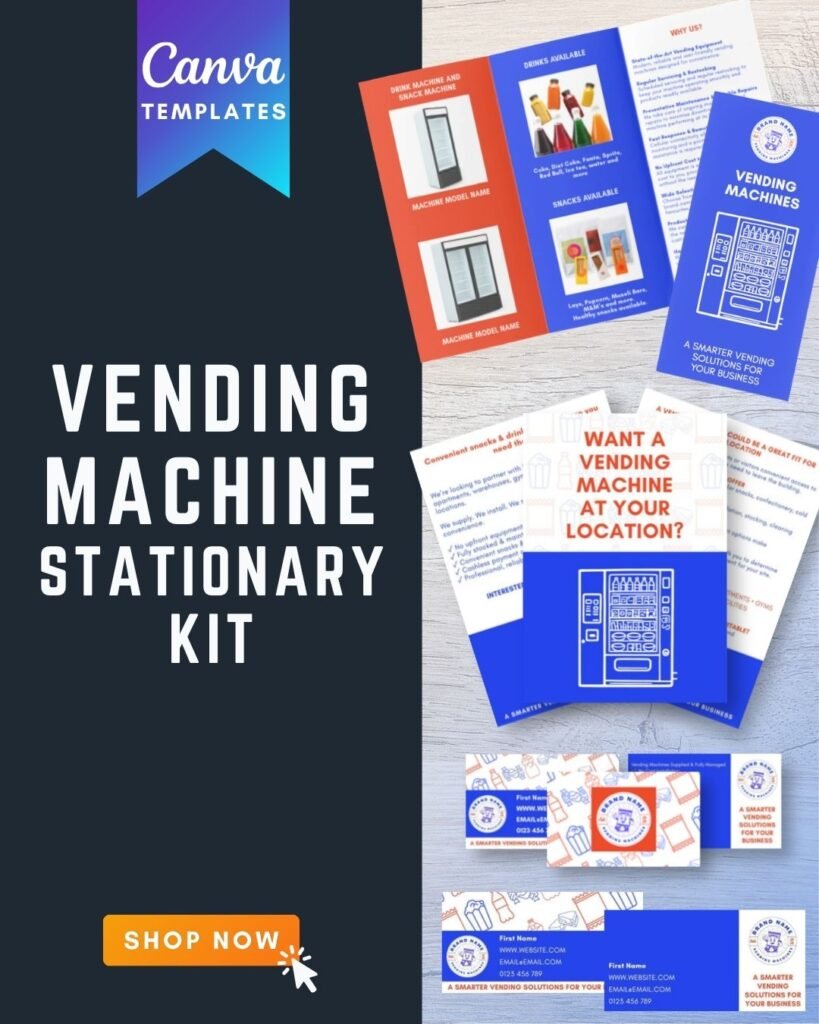
Need the basics?
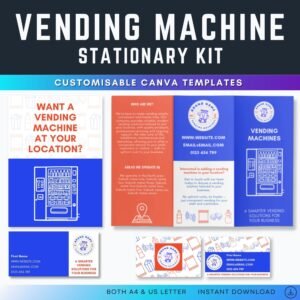
Whether starting out or re-branding, The Vending Machine Stationery Pack includes editable Canva templates for a brochure, flyer, business card and email materials, making it easier to create a consistent look for your vending business.
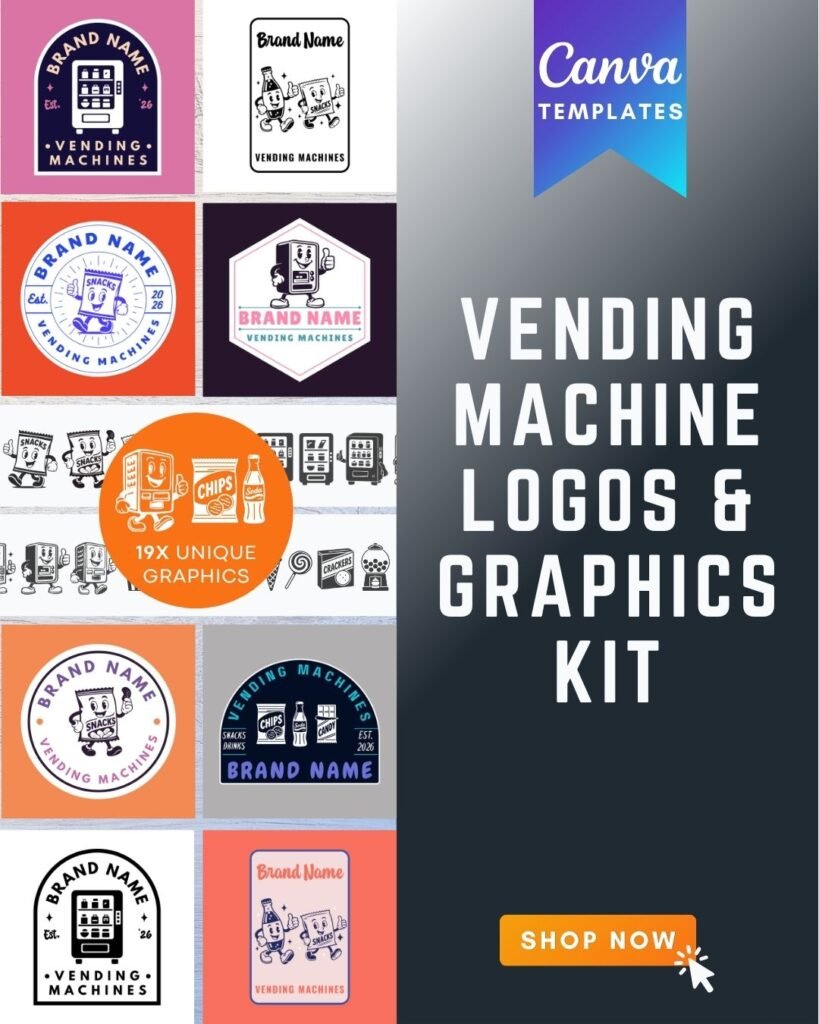
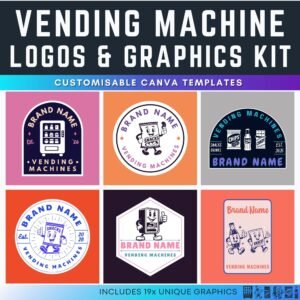
You can also use the Logo & Graphics Kit to create a cohesive visual identity across your business materials.
9. Approach Potential Locations
Once you’ve worked out what you’re offering and have your basic materials ready, it’s time to start looking for locations.
Don’t be discouraged if your first few conversations don’t lead anywhere. You’re effectively selling a service to another business, so the location needs to see a reason to say yes.
Think about the problem you’re solving for them.
A vending machine may provide their customers or employees with convenient access to food, drinks or other products without requiring the business to operate the service themselves.
When approaching a potential location:
- Keep your introduction short
- Explain what you offer
- Highlight the benefit to the location
- Have your information ready
- Be professional and easy to deal with
- Follow up appropriately
- Keep track of who you’ve contacted
Tip: Treat your location outreach like a sales process rather than relying on memory. Keep a simple record of who you’ve contacted, when you contacted them, what they said and when you should follow up.
This becomes increasingly important once you’re approaching multiple potential locations.
10. Don't Buy Everything at Once
One of the biggest advantages of securing your location first is that you can make much more informed purchasing decisions.
You don’t necessarily need a garage full of machines, shelves of inventory and every piece of equipment before you’ve even secured your first customer.
A more measured approach can look something like:
Research → Find potential location → Secure opportunity → Choose appropriate machine → Purchase equipment → Stock machine → Monitor performance → Refine
This allows your business to grow based on actual opportunities rather than speculative purchases.
Tip: Protect your cash flow in the early stages. Having money available for unexpected expenses, additional stock, repairs or your next opportunity can be more valuable than spending everything upfront.
Your Vending Business Starter Checklist
Before you launch your first machine, consider whether you’ve worked through the following:
☐ Decide what type of vending business you want to operate
☐ Research your target customers and locations
☐ Identify potential locations
☐ Approach potential locations
☐ Secure a suitable location/opportunity
☐ Calculate your startup and ongoing costs
☐ Research suitable vending machines
☐ Compare warranties and parts availability
☐ Choose your payment system
☐ Decide what products to stock
☐ Work out your pricing
☐ Set up your record-keeping system
☐ Prepare your business forms and documents
☐ Create your logo and basic branding
☐ Prepare your brochure, flyer and business cards
☐ Purchase your machine
☐ Purchase your initial inventory
☐ Install and set up the machine
☐ Begin tracking sales, stock and expenses
☐ Review what’s working and adjust
Start Small, Learn and Build
Starting a vending machine business doesn’t necessarily mean buying several machines and trying to scale immediately.
Your first machine can be an opportunity to learn how the business works in the real world — from finding locations and choosing products to managing stock, servicing equipment and understanding your numbers.
Focus on creating a solid foundation, keep good records and pay attention to what your customers and locations are telling you.
As you learn what works, you can gradually refine your systems and decide where you want to take the business next.
And remember: you don’t have to build everything at once.
A well-organised first machine can teach you far more than an expensive collection of machines sitting in storage.
- MORE VENDING MACHINE RESOURCES -
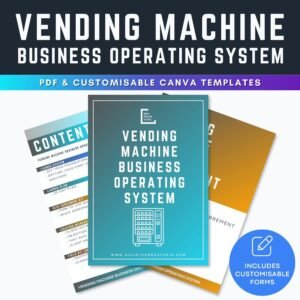
Vending Machine Business Operating System
Keep your business planning, records, forms and day-to-day operations organised.
Vending Machine
Stationery Pack
Create professional business materials with editable Canva templates.
Logo & Graphics Kit
Create a cohesive visual identity for your vending business and beyond.